அருகர்களின் பாதை

அருகர்களின் பாதைஅருகர்களின் பாதை

ஜெயமோகன் புத்தகங்களுக்கு விமர்சனம் எழுதுவது மாதிரியான சிக்கல் வேறில்லை.

'அருகர்களின் பாதை' இந்திய சமண வழித்தடங்களை தேடிய பயணம். பயணக்கட்டுரை ஆயிற்றே என்று வாங்கினேன். ஒன்று இரண்டு கட்டுரைகள் அவை எழுதப்படும் போது வாசித்திருந்தாலும் ஒரு புத்தகமாய் வாசிப்பது என்பது அலாதியானதுதான்.

ஆனால் ஜெயமோகன் வெறும் பயண கட்டுரை மட்டும் எழுதுவதில்லை - அதனுடன் அவரது பார்வையிலான வரலாற்றையும் எழுதி செல்கிறார். அதில் எதுவும் தரவு சரி பார்க்க பட்டதா இல்லை அவற்றின் ஆதார நூல்கள் எவை போன்ற எந்த வித தகவலும் கிடையாது. இணையத்தில் கட்டுரையாக வரும்போது இது சரியானதாக இருக்கலாம் - புத்தகமாக வரும் போது - தான் பேசும் வரலாற்றுக்கு - குறிப்பாக இந்திய 'இடது சாரி' வரலாற்று ஆய்வாளர்களை போகிற போக்கில் தவறு என்று சொல்லும் இடங்களில் மட்டுமாவது எங்கிருந்து இந்த வரலாற்று தகவல்களை அவர் பெறுகிறார் என்பதை தெரிவித்து இருக்கலாம்.

அத்தகைய தரவுகள் இல்லாமையால் அவரது எந்த வரலாற்று தகவல்களையும் ஒரு பிடி உப்புடன் எடுத்து கொள்வது நல்லது. எல்லா சமண மத கோயில்களின் இடிபாடுகளுக்கும் அலாவுதீன் கில்ஜியின் படையெடுப்பு காரணியாக இருக்கிறது. சமண கோயிலாக இருந்து இந்து கோயிலாக மாறியிருக்கும் இடங்களிலும் இதே விவரணை. இரு மதங்களுக்கும் இடையே இருந்த உறவின் அகல நீட்சிகளை நோக்காமல் ஒற்றை படையாய் இரண்டும் கிட்டத்தட்ட ஒரே மதங்கள் போன்ற சிந்தனைகள் கொஞ்சம் அலுப்பூட்டுகின்றன. தத்துவங்களில் தமிழின் ஒரு முன்னோடி என்றிருக்கும் போது இந்த மேம்போக்கான போக்கு கொஞ்சம் வியப்படைய வைக்கிறது.

ஒரு பயண கட்டுரையாக இந்த பயணம் வியக்க வைக்கிறது. கிட்டத்தட்ட கர்நாடகாவில் இருந்து ராஜஸ்தான் வரையிலான முக்கியமான சமண கோயில்கள் எல்லாமும் இடம் பெற்றுள்ளது. இந்த பயணம் காரிலும் , சமண தர்மசாலைகளை நம்பியும் மட்டுமே என்பது இன்னுமொரு சிறப்பு. தினமும் கிட்டத்தட்ட 200-300 கிலோமீட்டர்கள் என கிட்டத்தட்ட 8000 கிலோமீட்டர்களுக்கும் மேலான பயணம். அவற்றின் அனுபவங்களே சில புத்தகங்கள் எழுத எதுவாக இருக்கும்.

இவற்றை விரித்து எழுதி இருந்தால் தமிழுக்கு ஒரு அருமையான பயண நூல் மட்டும் இன்றி இந்த கால நாட்களின் இந்த கோயில்களின் நிலை பற்றிய ஒரு அருமையான ஆவணமாக இருந்திருக்கும்.

இணையத்தில் படிக்க, இந்த மொத்த பயண கட்டுரைகளும் இங்கே தொகுக்க பட்டுள்ளன.

கங்காபுரம் - அ. வெண்ணிலா

தமிழில் வரலாற்று புதினம் எழுதுவதெற்கென்று ஒரு பாதை உண்டு. கல்கியால் ஆரம்பிக்கப்பட்டு , விக்ரமன், அகிலன், நா.பா, சாண்டில்யன் என ஒவ்வொருவரும் நூல் பிடித்தாற் போல் நடந்த பாதை. ஒரு நாயகன் - அவன் பயணம் - ஒரு இளவரசியின் காதல் - ஒரு வரலாற்று சம்பவத்தின் நடுவே நம் நாயகன் - பல திருப்பங்களுக்கு பின் கதை முடிவுறும்.

இந்த templateக்கு சுஜாதாவும் விலக்கல்ல - 'காந்தளூர் வசந்தகுமாரனின் கதை' வாசிக்கும் போது எப்போது கணேஷும் வசந்தும் வருவார்கள் என்று தோன்றாத நேரமே இல்லை. பல வருடங்களுக்கு முன் கணையாழியில் வந்த நகுபோலியன் எழுதிய 'மழநாட்டு மகுடம்' மட்டுமே இந்த template கதைகளை கேலி சித்திரமாய் ஆக்கியது. தமிழ் வரலாற்று புதினத்தில் இந்த அலுப்பூட்டும் கதைகளை எழுதுவதை யாரும் நிறுத்த போவதில்லை என்பதே ஆயாசமாய் இருந்தது.

'கங்காபுரம்' இந்த templateஐ உடைப்பதன் மூலம் ஒரு புது வகையான (உண்மையில் வெகு பழமையான) வரலாற்று புதினத்திற்கு வழி வகுக்கிறது. இது ஒன்றே இந்த புத்தகத்தை படிப்பதற்கு போதுமான காரணம்.

ராஜேந்திர சோழனின் கதை எப்போதும் ராஜ ராஜனின் கதையின் ஊடாகவே சொல்லப்பட்டு வருகிறது. சோழ நாட்டின் பெரும் அரசனாய் இருந்த போதும் தன தந்தையின் நிழலிலேயே இருக்க வேண்டிய நிலை அவனுக்கு. அ. வெண்ணிலா, ராஜேந்திர சோழனின் இந்த 'தனிமை'யை எழுதுகிறார்.

நம் அரசர்களின் கதை அவர்களின் காதல்களாலும், போர் வெற்றி தோல்விகளாலும் மட்டுமே சொல்லப் பட்டு வந்திருக்கிறது. புறநானூறு, அகநானூறு காலங்களில் இருந்தே இதுதான் நம் வரலாறு. இந்த காதல்களுக்கும் , போர்களுக்குமான இடைவெளியில் இந்த அரசர்கள் என்ன செய்தார்கள்? சோழர் காலத்திலேயே இதற்கான விரிவான விடை அவர்களின் கல்வெட்டுகளிலும், செப்பேடுகளிலும் கிடைக்கிறது. அவர்கள் எழுப்பிய கற்றளிகள், செய்த நிவந்தங்கள், ஆட்சி முறை, மக்கள் மன்றங்கள், நிலப்பிரிவுகளும் அதன் ஆட்சி அமைப்புகளும் என சோழர்கள் தங்கள் தினசரி நடவடிக்கைகளின் தடயங்களை விட்டு சென்றுள்ளனர்.

வெண்ணிலா இந்த தடயங்களை சேகரித்து அவற்றின் ஊடே கதையை நகர்த்துகிறார்.ஊர் சபைகள், தேவரடியார் வாழ்வு, ராஜ ராஜன் பிரம்மதேயம் மூலமாக நிலம் பார்ப்பனர்கள் கை  மாறுவது, இடக்கை - வலக்கை சாதி பிரிவுகள் ஆழமாதல் என பல சமூக மாற்றங்களையும் தொட்டு செல்கிறது கதை.
ராஜேந்திரன் காதல் செய்தாலும் , போர் செய்வதில்லை (இந்த கதையில்!). ராஜேந்திர சோழன் என்ற கட்டமைக்கப்பட்ட அரசனின் பிம்பத்தில் இருந்தும் ராஜேந்திர சோழனாகிய மனிதனை மீட்டெடுக்க முயல்கிறார் வெண்ணிலா.

தஞ்சை எப்போதும் தன தந்தையின் அடையாளமாகிவிட்டதால் தனக்கென்று ஒரு தலைநகரம் , பெரிய கோவிலின் மாற்றாய் இன்னுமொரு கோயில் பெருவுடையாருக்கு என்று ராஜராஜனின் நிழலில் இருந்து ஓடுவதே அவன் வாழ்வின் பிரதானமாகிறது. வீரமாதேவி - பரவை நங்கை என காதல்களுக்கு பஞ்சமில்லை எனினும் அவனின் ஐந்து மனைவியர் பற்றி ஏதுமில்லாதது கொஞ்சம் ஏமாற்றமே.ராபர்ட் கிரேவ்சின் க்ளாடியஸ் சரித்திர நாவல்களின் தன்மை கொஞ்சம் தெரிந்தாலும் , அவற்றின் விரிவு தன்மை இல்லாதது ஒரு குறையே.

ஒரு தமிழ் சரித்திர நாவலின் எந்த லட்சணமும் இன்றி ஒரு சுவாரசியமான கதையை சொல்லி இருப்பது நன்று.

A Series of Unfortunate Events (2019)

Finished watching all three seasons of the 'A Series of Unfortunate Events' in Netflix yesterday and started wondering about the so many unresolved questions that I've been trying to get some answers.

Good fiction (and good movies) don't try to answer all the questions. The open questions and the open interpretation of the story is what makes good fiction interesting and worth remembering. It is like everyone has their own story.

'A Series of Unfortunate Events' is the story of, well, A Series of Unfortunate Events that happened to the Baudelaire orphans - as they are referred in the story - over a course of , like Sunny says , three seasons. The narrator is Lemony Snicket (who is part of the story as well) and has that moribund voice of the man defeated while narrating it.

The story is about the Baudelaire children and the nefarious, if somewhat stupid, villain, Count Olaf. The children, Violet, Klaus and Sunny were orphaned when their mansion was burnt with their parents inside. The banker in custody of their fortune puts them through a series of guardians while Olaf try to get the custody himself so that he can get their money. Every episode of this fight brings more despair to the orphans while Olaf kind of wins every time.

That is not all. The story is also about the secret organization, VFD and the schism which split the organization into two - 'volunteers' and 'villains' - thus, the parade of guardians for the Baudelaire children were either one or the other and the Baudelaire parents were part of the VFD as well, adding layers of interesting back stories and mysteries to fill.

Only that the narrator chose to fill some and leave the rest as is. Like when it is revealed that one of the Baudelaire parents might've survived the fire, but that knot is never un-knotted and the book ends without revealing which one survived and how and whether they get to have a happily ever-after with their kids.

A series of 13 books - 'A Series of Unfortunate Events' - I watched the Netflix series instead of reading the book. Vanathy did the reading of all the books though. I may have to pick up on that sometime. 

'Well-made' is a loosely defined term and in this context, it means exactly what it means. The series has a Gothic-Noir look to the entire series with dull gray/black backgrounds with brighter colors all around. With the tale of Lemony Snicket unfolding in the background as well in a absolute melancholy tone, the making hits the right note for the whole story.

The actors chosen for the leading parts were all amazing - especially Neil Patrick Harris as Count Olaf nails the role and it is difficult to think of anyone beating him as Olaf. The kids playing Violet and Klaus were excellent but we became fans of that sharp-biting little girl, Sunny Baudelaire in an instant. I mean, how cute can a baby be?

Vanathy gave 2 stars to her review on the last book and said the book had so many open questions, it felt incomplete. The TV series ends in a similar note as well - you have some answers and there are more questions as well - but thats what makes the whole thing fascinating. There are multiple stories that can be spawned by Lemony Snicket or others.

Overall, a very well-made series of an very interesting book (I am yet to read!)

பிரபஞ்சன் - நினைவுகள்

பிரபஞ்சன் மறைவின் செய்தி இன்று மாலை கேட்ட பொழுது என் பதின்ம வயதின் ஒரு நினைவு உதிர்ந்துவிட்ட உணர்வு.

'வானம் வசப்படும்' தொடராய் வந்த பொழுது வாசித்தது நினைவுக்கு வந்தது.  பிரபஞ்சனா அல்லது பிரஞ்சு பாண்டிச்சேரியின் மீதான ஈர்ப்பா என்று புரியாத நிலையில் வாசித்த நாட்கள். சென்னை வந்து சேர்ந்த நாட்களில் பாண்டி ஈர்த்தத்திற்கு இதுவே காரணம்.

பிரபஞ்சனின் எழுத்துக்களில் இருக்கும் மென்மை கலந்த அன்பு மனத்திற்கு தந்த அமைதி விவரிக்க முடியாது. ஒவ்வொரு நாவலின் பெண் கதாபாத்திரங்களும் அன்பின் பிரதிகளாகவே இருந்தார்கள். அவரின் எழுத்தே அந்த அன்பின் ஊற்றாய் இருந்தது.

அந்த அன்பின் வழியே மட்டுமே அவர் பெண்களையும் பார்த்தார். அதனாலேயே அவரால் பெண்களின் நிலையை உணர்ந்து எழுத முடிந்தது. பெண்களை புனிதத்திற்கும் வேசித்தனத்திற்கும் இடையே ஊசலாடவிடும் கலாச்சாரத்தை விமர்சிக்க முடிந்தது.

"மனைவி என்பவள் இங்கு துணை இல்லை ; சரி சமம் இல்லை; மாறாக அடுப்பறை அரசி ; படுக்கை அறை பத்தினி.
நமது திருமணம் பெண்களை கொன்றொழித்துவிட்டது. "

குடித்துவிட்டு கழுத்தை நெறிக்கும் கணவன்களோடு இன்னமும் வாழ்ந்து  கொண்டிருக்கும் பெண்ணிற்கு புதிய அறம்  விதைக்க வேண்டும் என்று சொல்ல முடிந்தது.

'இன்பக்கேணி ' நெடு நாள் கழித்து வாசித்த ஒன்று. ஆயியின் அன்பின் கேணியாய் இருந்த அந்த கதை பின்னொரு நாளில் பாண்டிச்சேரியில் ஆயி மண்டபத்தை தேடி போய் பார்க்க வைத்தது.

'மரி என்கிற ஆட்டுக்குட்டி' கற்றுக் கொடுத்த மனித நேயம் , அன்பின் வீர்யம் எல்லாம் கொஞ்சம் மனிதத்தையும் கூடியவரை பிறரிடம் அன்பையும் செலுத்த கற்றுக்கொடுத்தது.

பிரபஞ்சனை பற்றி எழுத வேண்டுமெனில் அன்பை தவிர்க்க முடியாததே அவர் எழுத்து வாழ்வின் சாராம்சமாகும். பிறிதொருமுறை அவரின் எல்லா நாவல்களையும் வாசிக்க ஒரு காரணமாக அவரது மரணம் இருக்கும்.

The Buddha and the Sahibs

The Buddha and the SahibsThe Buddha and the Sahibs by Charles Allen
My rating: 5 of 5 stars

I am not a believer of a benevolent colonialism as per the likes of Niall Ferguson or John Keay. However I also do not believe in the pure evilness of the British colonial enterprises as well. Like everything I think there is a big grey area in between which defines this rule. There are positives and there are negatives.

Charles Allen has been a favorite author for telling the stories of the erstwhile Raj from the days of reading 'Ashoka'. He tries to walk this grey part of the history without being judgmental and that's what makes this book fascinating.

I've read the stories about James Prinsep, Alexander Cunningham, "Oriental" Jones and quite a few of the interesting individuals who came here to conquer and ended up uncovering a large portion of Indian history which was neglected and unknown for reasons which are not relevant here.

'Buddha and the Sahibs' tells the story of the re-discovery of Buddhism in India in the late 18th and 19th centuries and the people who did that. The book reads like a detective fiction and expertly puts together the pieces of the discovery.

The story of Buddhism is an inspiring one and above all, the story of the King 'Devanampiya Priyadasi' - the most humane of all kings ever ruled otherwise known as Ashoka is another that defies belief. And what is more amazing is the way the king was identified after the masterly deciphering of the Ashoka Brahmi script by James Prinsep. This is a story that can be read again and again.

More than my infatuation with Ashoka, the book introduces a host of characters who are unbelievable to start with and astoundingly curious and meticulous to the end. James Prinsep who started as the assay master in the Benaras Mint and ended up deciphering the Ashoka Brahmi and identifying the King Ashoka as the Devanampiya Priyadasi of the inscriptions and dying by his 40. Alexander Cunningham - in between his constant part in the frontier wars - manages to trace the entire travel route of Huan-Tsang and identify a host of lost cities and write a long series of books as well.

They may be the product of the imperial era and may have had their prejudices (which are common to that era) but like William Jones - who founded the Asiatic society and be a judge as well - are all driven by the scientific curiosity of the day and there is no just reason for not being thankful to them at all.

It is not just those who are named here, I actually went through a few volumes of the Journal of Asiatic Studies (JAS) published by the Asiatic society founded by Jones and most of those who wrote about the flora and fauna of the country or the ruins of some regions are all local tax collectors and soldiers with some regiments. It is a testament to their interest that they not only observed what was around them, they recorded them as well.

The discovery of Buddhism in the Indian main land by all these people and the discovery of the ruins and location of the holy sites makes for very interesting reading. Charles Allen goes through the steps and the way the entire story unfolded with exciting discoveries. The various events and the unlikely heroes (Hastings or Curzon, anyone?) and of course, M.K.Gandhi and Ambedkar make a cameo as well.

The one part that I find missing is the how Buddhism was obliterated in the country where it was born and how the holy sites were laid waste or taken over by the local Mahants (as in the case of the temple at Bodh Gaya). That is a story that gets mentioned in the passing - like the story of the discussion between the Lama and the Shankaracharya - but is not pursued. I thought that would've made the book more complete.

Overall, a very interesting book..

Gandhi: The Years That Changed the World

Gandhi: The Years That Changed the WorldGandhi: The Years That Changed the World by Ramachandra Guha
My rating: 4 of 5 stars

As I finished the book, the struggle was to how to write about it and where to start. Gandhi lived a very crowded and active life and it is difficult to find what to write about it all as there is a sense of missing out on a lot of detail. The 900+ pages of the book amount to Guha's dilemma about the same. How to account for all the events of his life and those lives he touched upon and the events he shaped must have been a daunting task to set for oneself.

Guha's narrative encompasses the political events of the day, the personal life of Mahatma and how the world looked at him. The problem with all that is that Gandhi lived his life in full public glare and didn't bother to hide away anything. Hence most of what he wanted to say and do, he did in the public leaving nothing much of interest for an enterprising biographer writing 70 years later.

There are some new material from the archives which are interesting to read about and the correspondences but was a little disappointed by the non-judgemental tone of the entire book which even Gandhi would've found unacceptable.

A self-proclaimed 'Philosophical Anarchist', Gandhi's life was what he called his autobiography - his experiments with truth. He was one who was experimenting with the truth always - trying to change his perception of it if the results are not to his liking. He was open about it, wrote about it, keep talking about it and changed his views if he was convinced.

However, his basic principles of non-violence or civil disobedience did not get to change. He experimented the methods in which they can be taken to the masses (which experiments were mostly completed during his time in South Africa) but never changed the basic principle underlying them. However he was ready to talk about them to everyone, wrote tons of articles about them and practiced till his death.

So, the political part of the book has to tell the story which was well-known to everyone. To me, Gandhi's relationships with Rajaji or M.A.Ansari are the new. The movements he spearheaded, the reasons he pulled back the agitations are all well-documented and known. So Guha takes the path of showing the responses to these events from the press and the outer world. While that adds to the story, it does not alter it in anyway.

What I would've preferred is probably for Guha to place the events of Mahatma's life in a frame of the events of the day and try to make sense out of it. But sadly, the biographer stops at telling the story without a larger concept or a viewpoint of what happened. The latter part may have been a conscious decision but the former one was a missed chance.

Two personalities stand out in the book as important - one politically and the other on a more personal front.
Gandhi, Ambedkar and Jinnah
Dr B.R. Ambedkar comes out as a churlish, petty politician at the start of the book but seem to have had a change in status by the end. That I think, is doing injustice to him. Ambedkar's life took a different arc than the ones by the brahmins and banias of the day and probably Gandhi was the only person in that time who understood that and treated Ambedkar as more of an equal when others tend to look at him as a small time politician from the hinterland. Mahatma understood the significance of what Ambedkar is standing for and the truth of it - the injustices done to the untouchables - made him turn tack and focus on the reformation after the Poona pact than any other politician in those days.

The impetus given by Ambedkar's stand helped in the opening of the temples and wells for the lower castes and helped in moving forward the reformation needed in the Hindu religion as a whole. This is a relationship and issue that resonates more in the current India - which is still struggling to move forward on these reforms and has to handle the resurgent backward castes along with the rest of the Brahminical hierarchy and the Dalit identification has made it more difficult to implement any now. A deeper analysis of these chapters would've made a lot more sense as a book for the modern India.
Saraladevi

The episode of Gandhi's romantic liaison with Saraladevi Chaudarani is something that was new to me. I never heard or read about it before now. So it was interesting to read about this part of Gandhi's life but as Guha admits there is little material available - their correspondences seem to have been destroyed with only a few letters left and so a lot of the story seems to be surmises from the references to their relations in other people's letters and writings. So while it is interesting, it is also the part where there is not much data. However, based on what I read, the affair lasted about a couple of years with no physical consummation but Mahatma keep referring to the episode in later years as when he came close to physical lust (though without any direct reference to the lady). But how important it is in the overall life of Mahatma is a question that never gets asked or answered.

Surprisingly, Nehru gets a minuscule part in the book (less than Patel or Bose), but Jinnah gets his share but the nuances of the discussions and dissent in Congress with Mahatma over partition are glossed over.

Overall, I was left a little dissatisfied with the book as I would've expected Guha to tell a little about the relevance of Gandhi's life in the modern India with the resurgent Hindutva in power and the Hindu-Muslim harmony is in more danger than any other period of the free India. That would've made the book a little more than a biography but made a lot of sense .

The Ballad of Buster Scruggs (2018)

Bleak landscapes and the morbid story lines are nothing new to the Coen Brothers. I remember the night I watched 'Fargo' exactly for the same reason. Cooped up in a downtown apartment in Omaha with a few feet of snow making it impossible to go out, the movie pretty much summed up the mood of that night in 1999.

It is exactly for the same reason that I love the Coen brothers as well. They can show a ray of sunshine now and then like they did in 'O Brother, Where art thou?' but then it is when telling sordid tales coupled with desolate landscapes that they actually shine.

So it was with that expectation that I started watching 'The Ballad of Buster Scruggs' which I have to say is probably the grimmest of the tales told by the Coens and the most frivolous as well. There are no happy endings but just a reminder of how most of the tales end in real life.

The film is structured as an anthology of six different stories happening in the American west of the yore and is told as chapters of a book. All six stories handle different parts of the hard life in the west  the wagon trains, the saloon fights, the coach travels, the gold rush but all are held together by dark humor and dark drama.

The film opens with a cheery note nevertheless with the story of the quick draw Buster Scruggs a.k.a San Saba Songbird , making light work of the outlaws in a bar and a saloon before unwittingly killed by another young gun. As Buster in his whites with a angels wings and a lyre bursts into a duet with his killer admitting that he cannot be the top gun forever - the whimsical notion of death and the life in the west itself comes to the fore.

However, to me the best of the six stores have to be the one called 'The girl who got rattled' which combined a bit of everything and threaded a story which just have to end in tragedy. Zoe Kazan, as the sweet Ms. Alice Longabaugh who loses her brother while on the Oregon trail and was looking forward to a marriage with the trail hand before everything ends in a misjudged fight with the Indians. The reaction of Zoe when marriage was proposed is a delight to watch and the life they start imagining in Oregon before everything crashes down is a reminder of how lives are lived.

The final story of the anthology is also the one which tries to make sense of all the other tales by some philosophical discussion and it is interesting to follow the discussion which goes from being silly at the start to a discussion about love into the inevitable death as they stage coach riders reach their destination. As Rene, one of the riders, tries to explain the dichotomy of the life away and define the way love is perceived by different people, the conversation ends with the inevitable dichotomy of those living and dead.

The exceptional beauty of the landscape is contrasted with the lives of the people who try to make it there. The loving thing about any movie by the Coen brothers is the witty wordplay combined with sleek edits to tell  the stories. The whole thing is attenuated by the beautiful Prairie landscape and the never ending lands of the west.

In the 'Meal ticket' this beauty of the land and the brutality of life itself is brought out through the repeated talk on the Ozymandias and the story of Kane and Abel. There is no moral scale here but only a question of surviving the rugged life.

The movie eventually take one look at the life and the morbid ending awaiting everyone and laughs at the whole charade of living it.

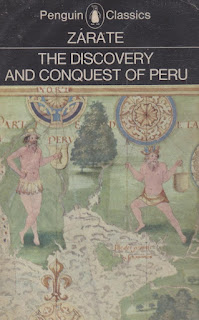
The Discovery and Conquest of Peru - Zarate.

பழைய புத்தக விற்பனையின் போது இந்தப்புத்தகத்தை வாங்கினேன். 1528ம் வருடம் ஸ்பானிய வீரர்கள், இன்றைய பனாமாவின் பசிபிக் கடற்கரைகளில் இருந்து தெற...